
This morning, during an early meeting, one of the members of our group was wearing a baseball cap. We were discussing how easily we can misread people based on the way they appear to us.
Then something interesting happened. He turned his cap sideways.
Suddenly, his demeanor seemed different. The way we interpreted him changed, even though the person wearing the hat had not changed at all. He was still the same person. The only thing that changed was the direction of his cap.
It made me think: How often do we mistake what we see for who a person really is?
We observe someone’s appearance, words, actions, or attitudes and begin interpreting what they mean. We take in the data, run it through what we have learned or experienced, and reach a conclusion about the person in front of us. But the data and our interpretation of the data are not necessarily the same thing.
What we think we see may tell us as much about our own assumptions as it does about the person we are observing.
In a world where first impressions are sometimes the only impressions, we should be more discerning with what our impressions are saying to others. The impressions you leave result in the invitations you receive.
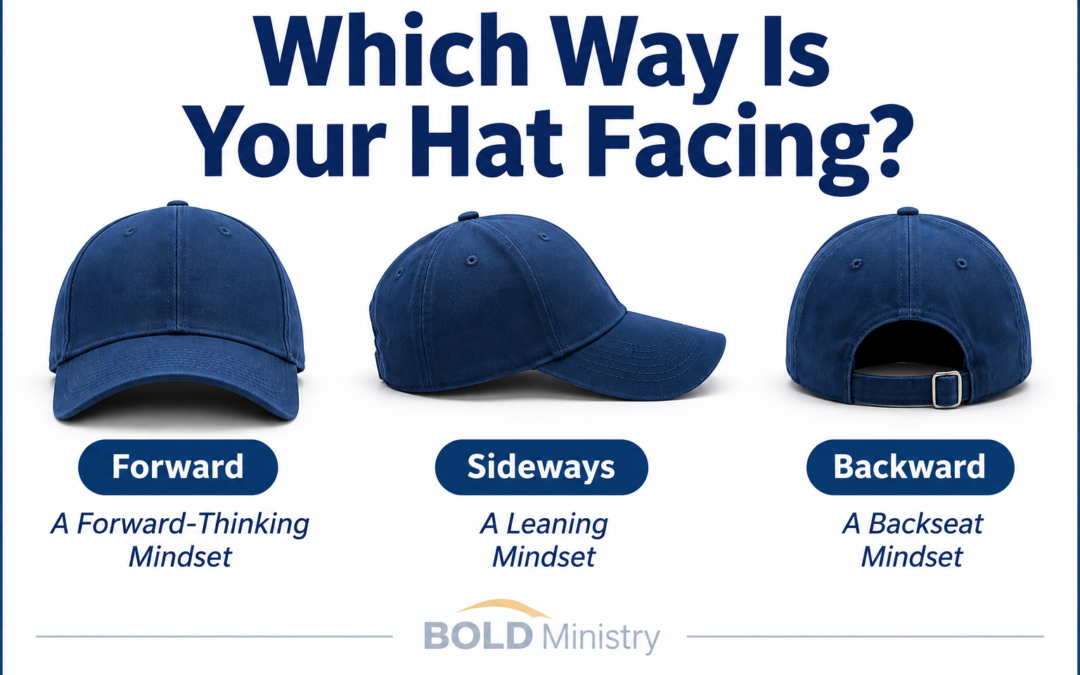
But the baseball cap got me thinking about something else, too. “What if the direction of our hat represents the direction of our mindset?” There could be three possibilities:
The Forward-Facing Hat: A Forward-Thinking Mindset
When we wear our hat facing forward, we are looking straight ahead. We are intentionally engaged, attentive, and ready to move. We are willing to consider possibilities, embrace responsibility, and take the next step. This represents a forward-thinking mindset. Forward thinkers don’t necessarily have all the answers. It just means we are willing to look ahead, learn from the present, and prepare to adapt ourselves and actions for what comes next.
The Sideways Hat: A Leaning Mindset
When we turn our hat to the side, we introduce a leaning mindset. This is where we may lean toward one perspective or another, favoring one side of an argument, or allowing our biases to influence how we see a situation. Perspectives aren’t necessarily wrong, because we all have them. But the agility of mind to examine our perspectives gives us the power to see beyond it.
Sometimes, the problem isn’t that we have taken a side. It’s that we have tilted our thinking so far that we can no longer see the whole picture.
The Backward-Facing Hat: A Backseat Mindset
When we turn our hat completely around, it makes me think of someone sitting in the backseat rather than taking an active role in what lies ahead. The backseat mindset can mean complacency, disengagement, hesitation, and/or a reluctance to take responsibility. Instead of moving things forward, they wait for signal or someone else to do something.
Of course, these are metaphors, not judgments about people based on how they wear their hats. A baseball cap doesn’t tell us someone’s character. That’s precisely the point of the original observation. But our mindset does influence the way we show up to embrace the world. Every day, we make choices about the direction in which we point our thinking. Those choices become visible through our words, actions, attitudes, and decisions.
Whatever way we are facing is a choice. Sometimes we get habitually comfortable with ‘the direction of our caps.’ We can lean too heavily on our own opinions that true perspective is lost. And even worse, we cannot see an opportunity and miss the chance to ‘move the ball forward.’ The discipline is to be intentional about which direction we are facing before we decide what direction everyone else is going.
So, which way is your hat facing today?
And just as importantly, before you decide which way someone else’s hat is facing, have you taken the time to notice your cap direction?